10 things that could save your Irish citizenship application
You can qualify on paper and still be sent back over a missing document, an expired card or a deadline nobody noticed. Here are the ten checks that keep your application on track, and the €175 fee in your pocket.
Nobody gets a second look at a careless application. Immigration Service Delivery (ISD) is working through a backlog, and when a form arrives with a missing document or a gap in someone's permission, the simplest thing is to send it back. Citizens Information says most applications are processed within 19 months. A refusal for a fixable mistake sends you back to the start of the queue, and the fee is gone.
The good news: almost every one of those mistakes can be caught at home, before you press submit. Here are ten, in the order you'd hit them.
1. Count your days, not your years
"Five years" is really 1,825 days of reckonable residence in the 9 years before you apply, including one continuous year just before you apply. People who count from their arrival date are often months short, because time before their first counting permission doesn't count.
Work from the dates on your IRP cards and old passport stamps, not from memory. ISD has an official residency calculator, and our 30-second calculator shows your date under today's rule and the proposed 8-year rule side by side.
2. Never let your IRP card expire
This is the one that catches careful people. Time in Ireland while your permission has lapsed doesn't count as reckonable residence, even if you've lodged a renewal and are waiting for the new card. The Irish Examiner reported on 31 October 2026 on an American couple in Wexford who applied to renew in May and were still waiting: every month of that gap is a month they may have to make up.
Renew as early as the system allows, keep the confirmation email, and write down the dates of any gap. If you had one, your count has to step over it.
3. Check which stamps actually count
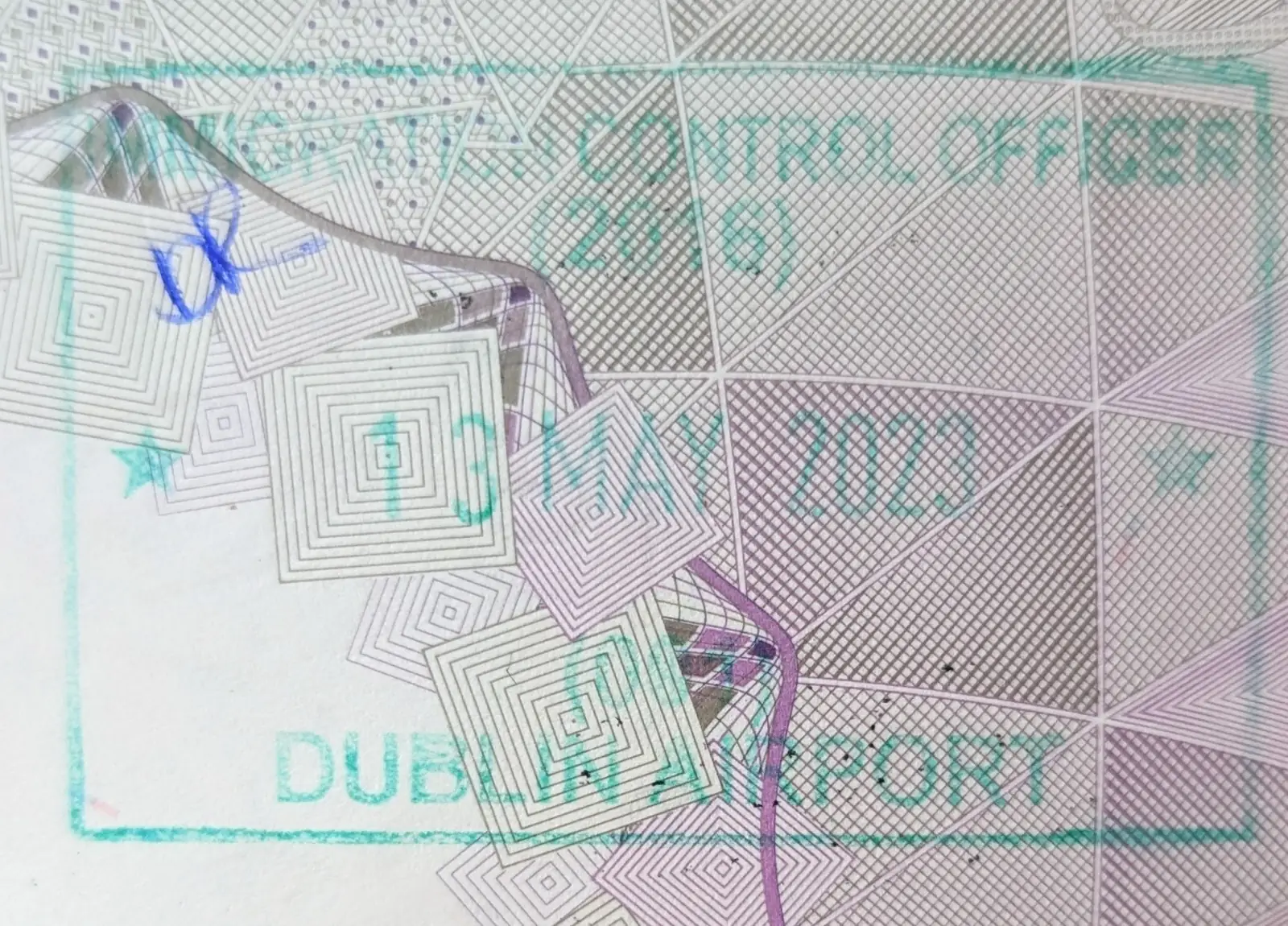
Stamps 1, 1G, 3, 4 and 5 count. Stamp 2 and 2A (students) don't, and neither does time as an international protection applicant. A Trinity PhD graduate told the Irish Examiner that after four years of a State-funded doctorate he was only eight months into the count. Our guide to stamps goes through each one.
4. Watch the 70 days abroad in your last year
In the 12 months before you apply, you can be out of the State for up to 70 days, plus up to 30 more if the Minister accepts there were exceptional reasons such as illness or family circumstances. Over 100 days and the application is ineligible, and the fee is gone.
The day you leave and the day you come back don't count as days away. Keep boarding passes or booking emails for every trip; a summer at home and two weddings can add up faster than you think.
5. Get one strong document for every year
ISD scores your proof of residence: you need 150 points for every year you count. A strong document (a bank statement with regular transactions, a P60 or Revenue statement, a letter from your employer) is worth 100. A utility bill or a tenancy agreement is worth 50.
The rule people miss: every year needs at least one strong document. Three phone bills add up to 150 points and still fail. Revenue statements are free to download from myAccount and cover every year you worked.
6. Certify copies in person, by the right person
Your passport and birth certificate copies must be certified by a practising solicitor, commissioner for oaths, peace commissioner or notary public, who sees the original. A friend, your employer or a Garda can't do it. Peace commissioners do it for free. Citizens Information explains how to find one near you.
7. Have a passport that's in date
A valid passport is worth 150 points of identity on its own. An expired one is worth 50 or 75, and you'll need to make up the rest with other documents. If yours runs out soon, think about renewing it before you apply: ISD may ask to see the original during processing.
8. Be complete about your history
Good character is judged partly on the Garda vetting report, which covers criminal records, driving offences, cautions and pending cases. Leaving something out looks worse than the thing itself. Declare everything the form asks for and pay any outstanding fines. Under the 2026 Bill, debts to Revenue or Social Protection and unpaid court fines would become an automatic bar.
9. Answer ISD within 28 days, and tell them if you move
If ISD asks for more documents, you have 28 days. A reminder comes after 18. Miss it and the application is refused. Make sure the email address on your application is one you read every day (check its spam folder too), and tell ISD in writing if you change address during the wait.
10. Apply as soon as you qualify
The 2026 Bill would raise the requirement from 5 years to 8 (3 to 5 for spouses) and add language, civics and income tests. It is not law yet: as of early November 2026 it is still an outline, waiting for the Oireachtas Justice Committee, which is expected to examine it after the Halloween recess. The Government says it wants the law in place by the end of the year.
The outline protects applications already lodged from its changes to which time counts. Applications jumped from 2,611 in August to 8,765 in September as people moved early. If you meet today's rules, our guide on applying before the rules change explains what to do first. Just don't rush so fast that you trip over numbers 1 to 9.
Before you press submit
1,825 days counted from your IRP dates · no gaps in permission · no Stamp 2 time counted · no more than 70 days away in the last year · 150 points and one strong document per year · copies certified in person · passport in date · everything declared · an email address you check daily. The full list of documents is in our requirements guide.
Questions people ask
Why do Irish citizenship applications get sent back?
The most common reasons are missing or uncertified documents, not enough proof of residence (or no strong document for a year), gaps in immigration permission, and declarations missing or files uploaded in the wrong place.
Do I get my €175 back if my application is refused?
No. The application fee isn't refunded if the application is refused as incomplete or because you missed the 28-day deadline for documents. You have to apply and pay again.
Does time waiting for an IRP renewal count towards citizenship?
Time when your permission has expired doesn't count as reckonable residence, even if a renewal is in progress. Renew as early as you can and keep a record of any gap.
Does student time on Stamp 2 count for Irish citizenship?
No. Time on Stamp 2 and 2A doesn't count towards reckonable residence. Stamp 1G, which many graduates move to, does.
Should I apply now, before the 8-year rule?
If you already meet today's rules, nothing stops you applying now. The Bill isn't law yet, and no start date has been published. A solicitor can advise on your own case.
Sources
- How to Become an Irish Citizen (Immigration Service Delivery): documents, points, certification, fees and the 28-day rule
- Becoming an Irish citizen through naturalisation (Citizens Information)
- Irish Nationality and Citizenship Act 1956, section 15C (Law Reform Commission): absences in the last year
- 'Biggest reform' of citizenship process in a generation: What Ireland's new rules will mean (Irish Examiner, 31 October 2026)
- Citizenship changes: Cork-based South African artist calls for more empathy from Government (Irish Examiner, 20 October 2026): committee scrutiny after the Halloween recess
- Numbers applying for Irish citizenship soars by 236% ahead of 'massively unfair' rules change (Irish Examiner, 13 October 2026)
- General Scheme of the Irish Nationality and Citizenship (Amendment) Bill 2026 (gov.ie), Heads 5, 6 and 9
Read next
-
 Start here
Glossary
Irish citizenship words, explained simply
Official writing about citizenship uses a lot of special words. Here's what each one means, in plain English.
4 min read →
-
 30-second tool
Calculator
Irish citizenship calculator: how long until you can apply?
Move the slider to see how long you'd wait under today's rules and under the proposed ones. It takes 30 seconds, and nothing you enter is saved or sent.
2 min read →
-
 Trending
8-year rule
The 8-year citizenship rule: will it affect you?
The Government wants to raise the residence you need for Irish citizenship from five years to eight. Here's how the new rule would work, who it would catch, and what hasn't been decided.
7 min read →