What does it mean to be Irish?
There's a light in a window in Dublin that was lit for people who weren't there. To understand why, you need the whole story.
In 1990, Mary Robinson became President of Ireland. One of the first things she did was put a light in a window of Áras an Uachtaráin, the President's house in the Phoenix Park.
It wasn't for anyone inside. It was for the people who had left.
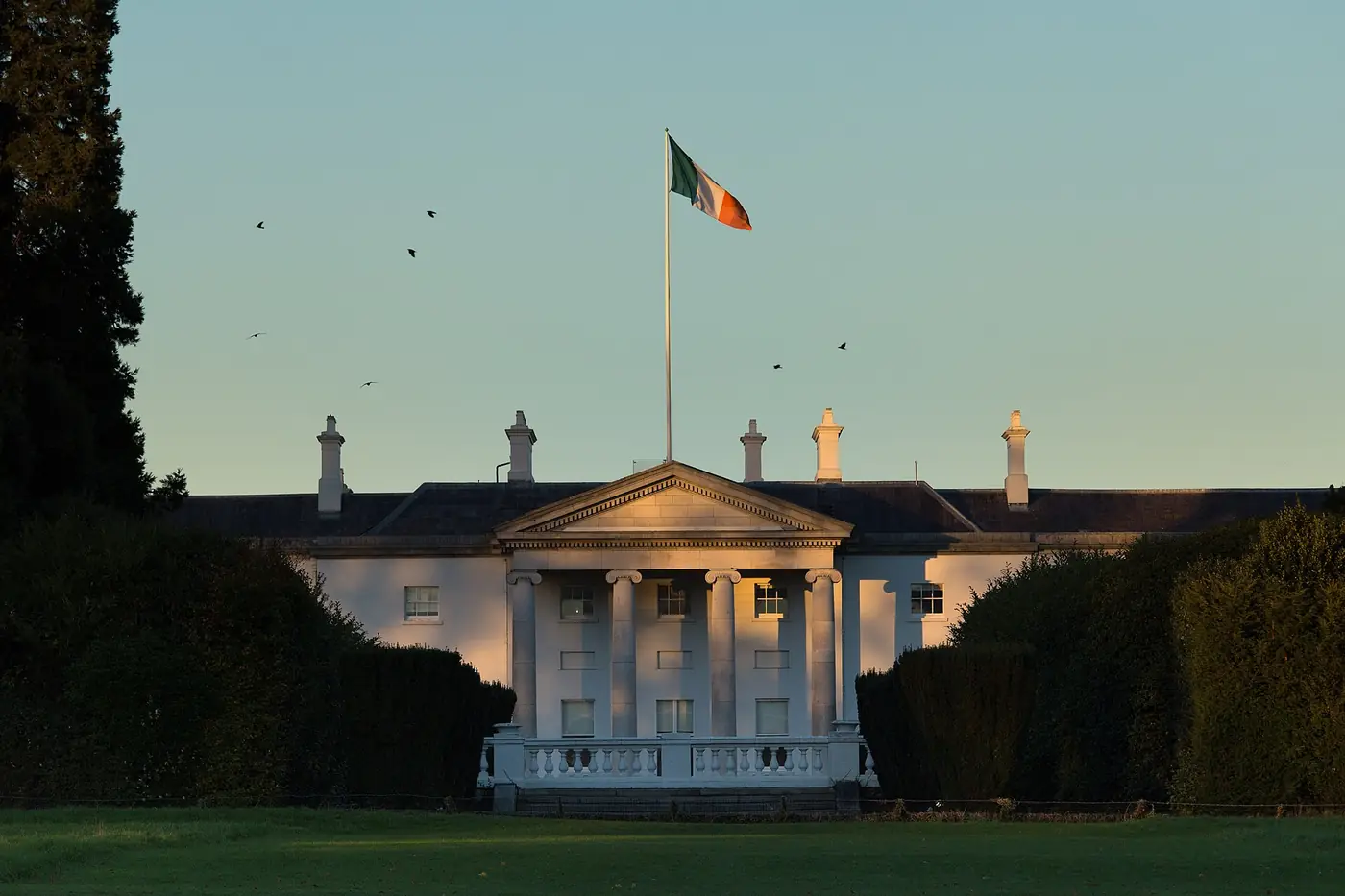
A light in the window is an old Irish custom. It tells someone travelling at night that they are welcome. To understand why a country would leave one on for its emigrants, you have to go back a long way. Back to a time when being Irish was something you had to hide.
School behind a hedge
In the 1700s, the Penal Laws shut most Irish people out of public life. Catholics, the large majority, were restricted in owning land, voting, holding office and carrying weapons. For a stretch of that century, Catholic schools were against the law.
So people taught their children anyway.
They paid travelling teachers in coins, food or a bed for the night. Classes met in barns, cabins and sometimes out in the open. They became known as hedge schools. Children learned reading, sums, Latin and Irish poetry from teachers working outside the law.
That's the first thing to know about being Irish: when you take something away from the Irish, they find another way.
But nothing prepared the country for what came next.
The hunger
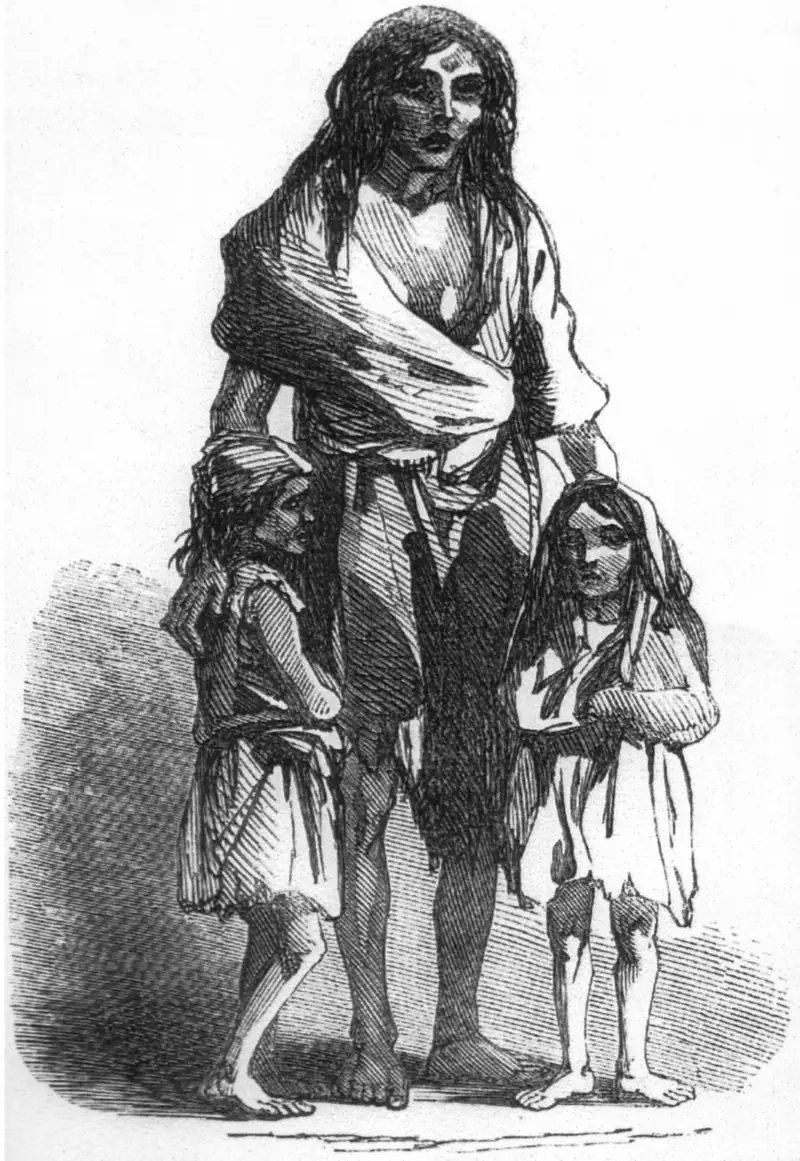
By the 1840s, millions of people depended on one crop to survive: the potato. In 1845, a disease called blight arrived. Potatoes turned black and rotted in the ground. It came back the next year, and the year after that.
Between 1845 and 1852, roughly one million people died of hunger and disease. More than a million more emigrated. In 1841 the census counted about 8.2 million people on the island. By 1851 it was 6.5 million.
And while people starved, large amounts of food were still shipped out of Ireland. That fact still sits heavily in Irish memory. In Irish, the Famine is often called An Gorta Mór: the Great Hunger.
Families walked to workhouses that were already full. Whole villages emptied. Some of them were never lived in again.
If the story stopped here, it would only be a tragedy. It doesn't stop here.
A gift from 4,000 miles away
In 1847, news of the Famine reached the Choctaw Nation in what is now Oklahoma. Only about 15 years earlier, the Choctaw had been forced off their own land by the US government and marched west on what became known as the Trail of Tears. Thousands of them died on the way.
They had very little. They collected money for Ireland anyway. The figure usually given is $170, a large sum at the time, from people who knew exactly what hunger and losing your home felt like.
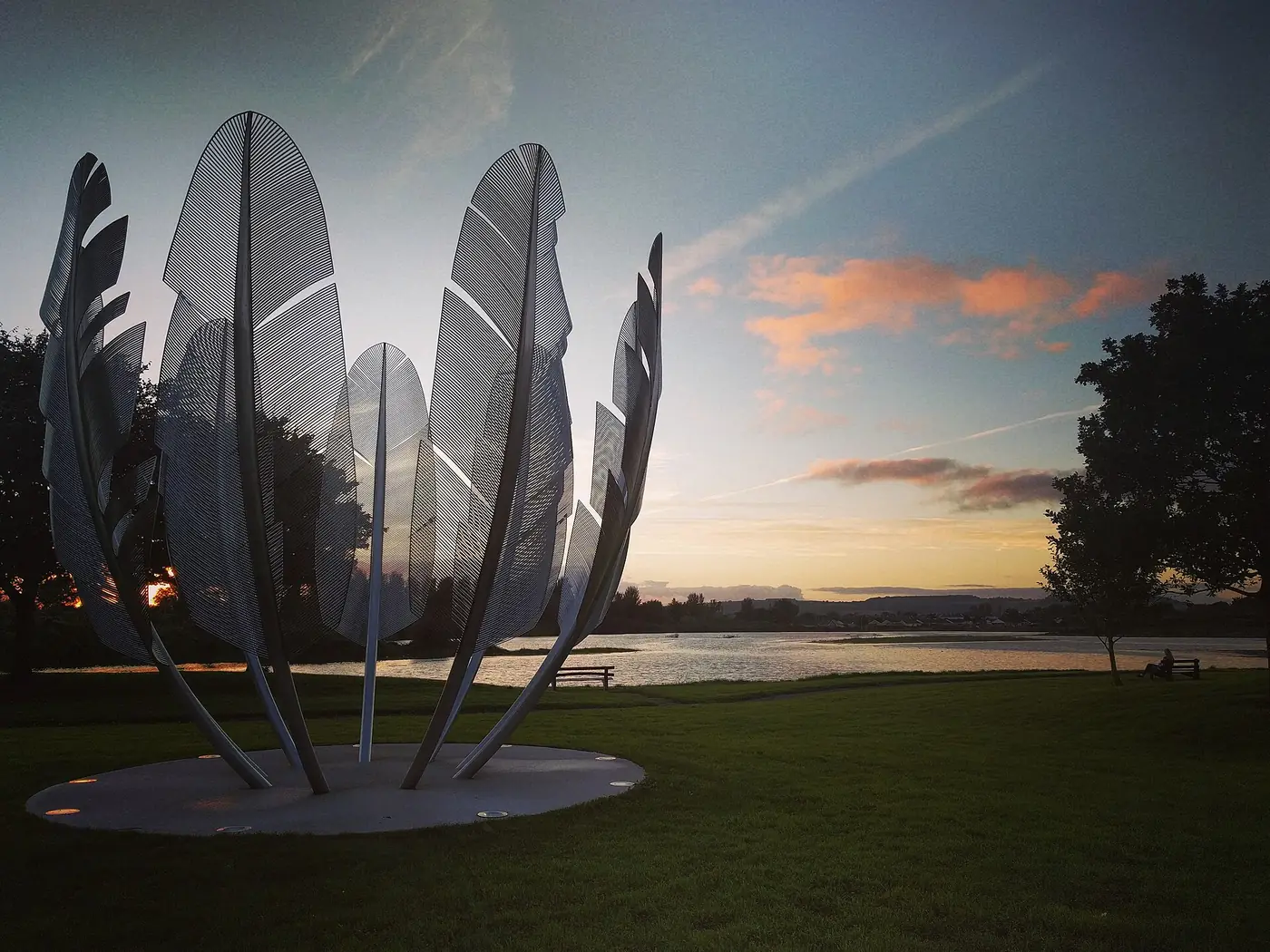
Ireland never forgot. In 2017, a sculpture called Kindred Spirits was unveiled in Midleton, County Cork: tall steel feathers arranged in a circle like a bowl of food. And in 2020, when the pandemic hit the Navajo and Hopi Nations hard, thousands of Irish people donated to their relief fund. Many left the same message: we remember the Choctaw.
That's the second thing about being Irish: a kindness is never forgotten, even after 170 years.
The leaving
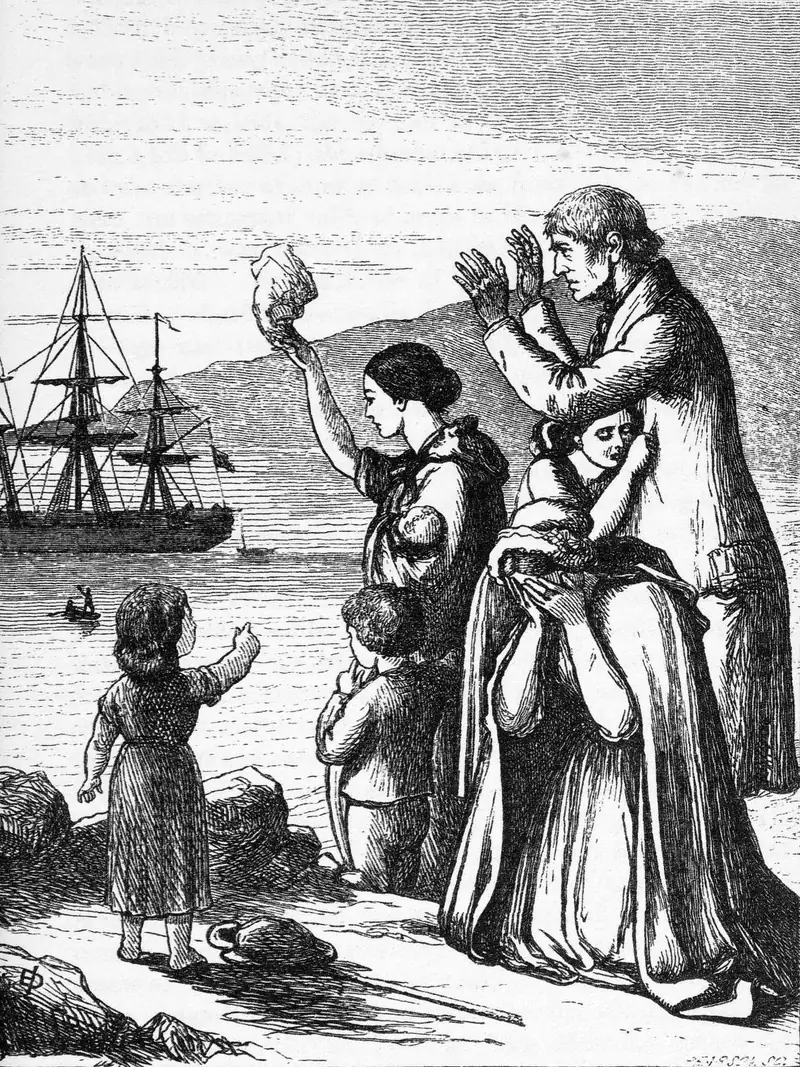
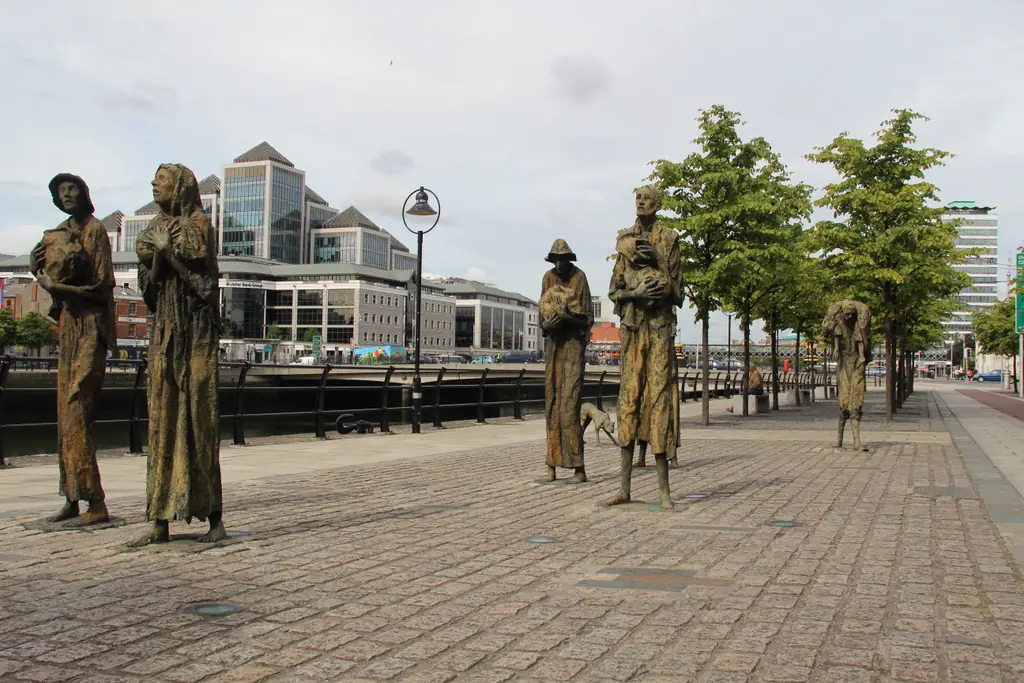
The Famine started something that didn't stop for over a century: emigration. Between 1845 and 1855, at least 2.1 million people left Ireland. Many crossed the Atlantic on crowded ships so deadly that people called them coffin ships.
When a son or daughter left for America, families often held a gathering the night before. Music, dancing, tears. People called it an American wake, because everyone in the room knew they would probably never see that person again.
Think about that. A goodbye so final that it was treated like a death.
The Irish who left built cities. They dug canals, laid railways, raised families and sent money home. Today, tens of millions of people around the world have Irish roots. Every one of those families started with someone who had to leave.
Standing up
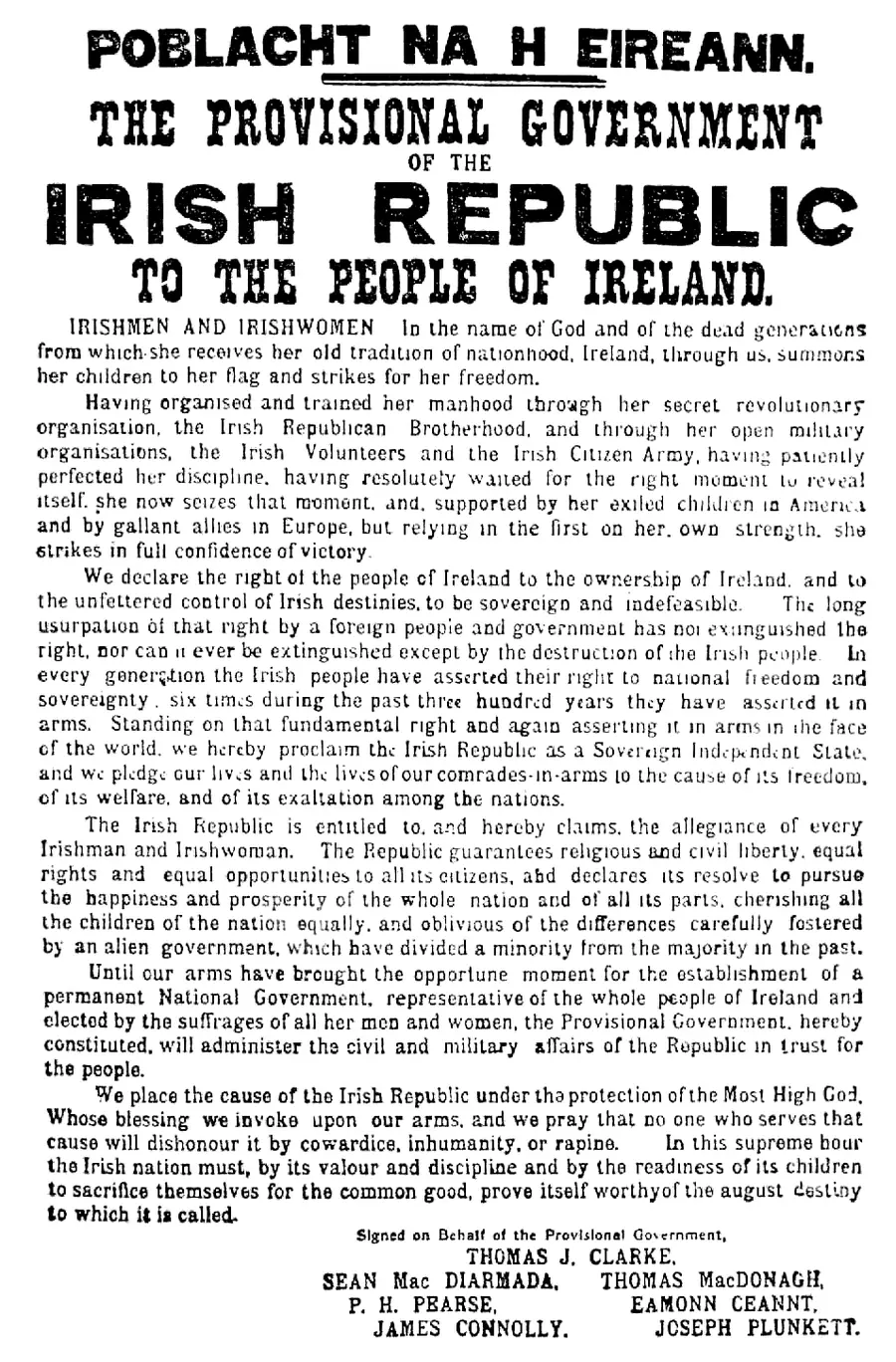
On Easter Monday, 24 April 1916, a small group of rebels took over the General Post Office in Dublin and read out a Proclamation declaring an Irish Republic. It promised religious and civil liberty, equal rights and equal opportunities, "cherishing all the children of the nation equally".
The Rising was defeated within a week. All seven men who signed the Proclamation were executed within weeks.
But the executions changed how many people saw the rebels, and support for independence grew. Years of conflict followed. In 1922 the Irish Free State was founded. In 1937 the people voted for their own Constitution, Bunreacht na hÉireann, which says all powers of government come "under God, from the people". In 1949 the State formally became a republic.
After centuries of other people deciding how Ireland was run, the Irish people would now decide for themselves.
It should have been the happy ending. It wasn't. Not yet.
Leaving, again
Freedom didn't fill empty pockets. In the 1950s, hundreds of thousands of people left to find work in Britain and America. The country's population kept falling for over a hundred years after the Famine.
It happened again in the 1980s, when unemployment was high and a generation of young people packed their bags. And again after the 2008 crash, when Irish airports filled with families saying goodbye at departure gates.
Almost every Irish family has someone who left. Many have someone who never came back.
That's why the light in Áras an Uachtaráin mattered so much. And it's why Ireland's Constitution has a line that very few countries have: the Irish nation "cherishes its special affinity with people of Irish ancestry living abroad".
Bringing everyone together
There is an old Irish tradition called the meitheal. When a farmer had a harvest to bring in, the neighbours came to help. Then that farmer helped the next one. Nobody was paid. Everybody turned up.
And there's a saying every Irish child hears sooner or later:
Ar scáth a chéile a mhaireann na daoine.
People live in each other's shelter.
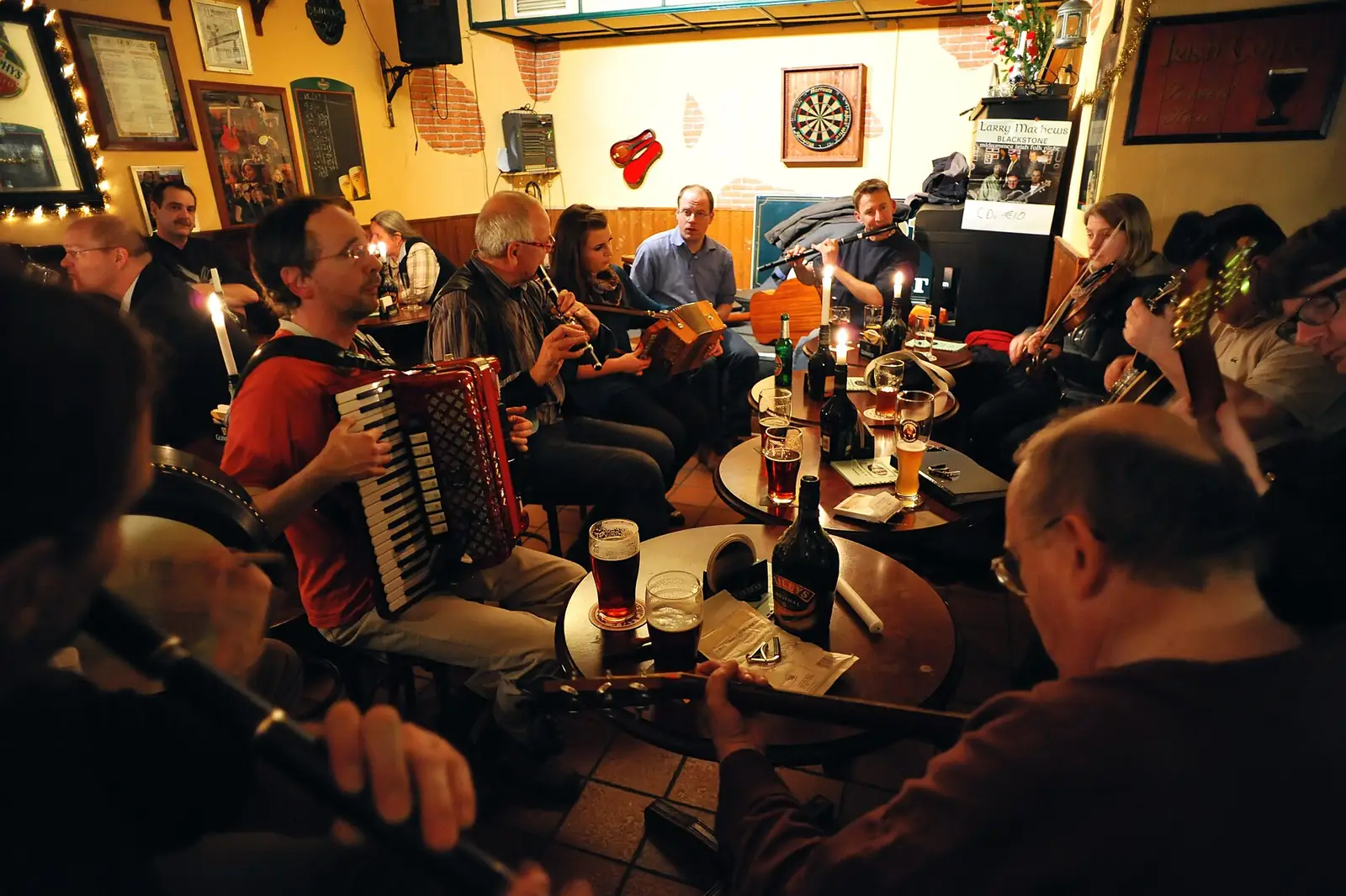
You can see that idea in modern Ireland too. On 22 May 1998, voters across the island approved the Good Friday Agreement, helping to end decades of violence in Northern Ireland. On 22 May 2015, exactly 17 years later, Ireland became the first country in the world to allow same-sex marriage by popular vote, with 62% voting yes.
Both times, it was the people who decided, not only the politicians. That's the third thing about being Irish: the big decisions belong to everyone.
Rebuilding
Then something happened that nobody alive in 1851 would have believed.
People started coming to Ireland.
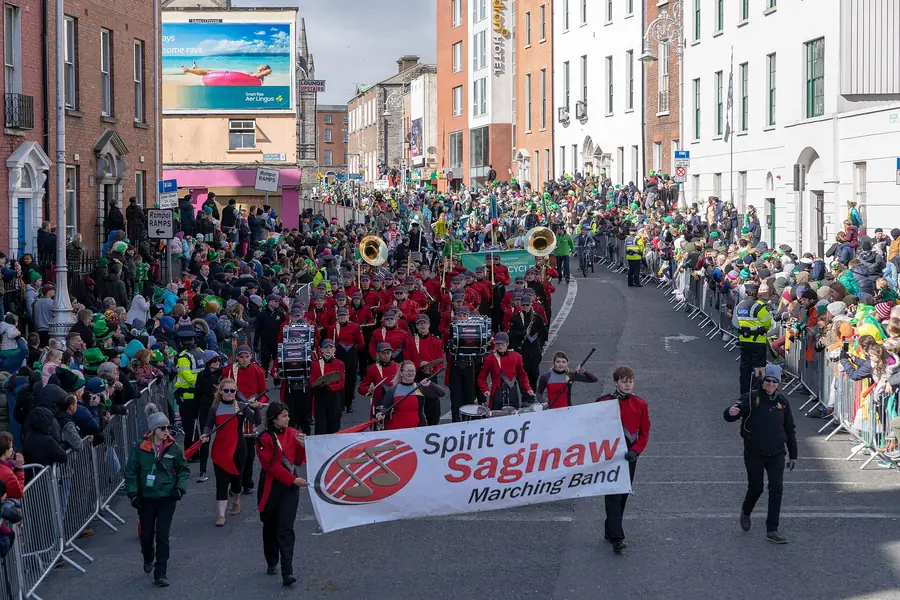
Emigrants came home. Nurses, doctors, engineers, students and families arrived from all over the world. The 2022 census counted 5,149,139 people living in the State: the first time the population had passed five million since 1851.
It had taken 171 years for the State to climb back to where its counties stood in 1851.
The same census counted more than 630,000 people living here who hold another country's citizenship. Every year, thousands of people stand up at citizenship ceremonies and declare their "fidelity to the nation and loyalty to the State". People who arrived from Brazil, India, Nigeria, Poland and the Philippines now have Irish children, coach local GAA teams and complain about the weather like everyone else.
So what does it mean to be Irish?
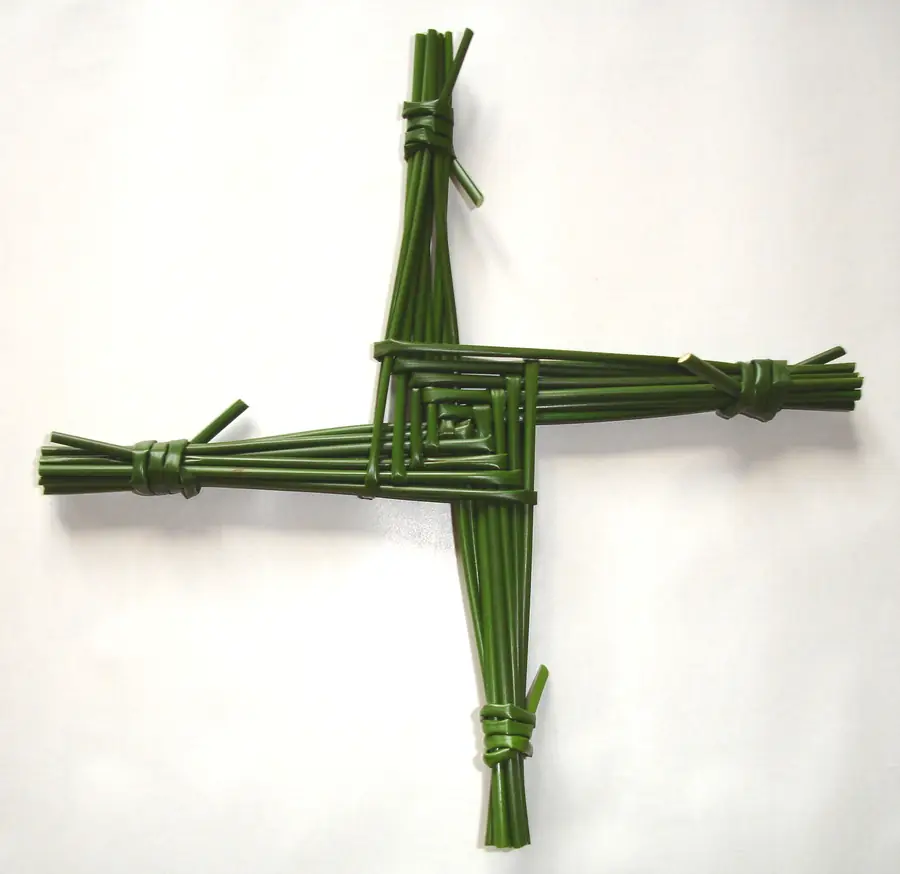
It isn't one bloodline or one accent. Through hidden schools, hunger, exile and freedom, the same things keep coming back:
- You find another way. The hedge schools.
- You remember kindness. The Choctaw.
- You never forget the people who left. The light in the window.
- You turn up for your neighbours. The meitheal.
- The people decide. The Constitution, and the votes that changed the country.
That light in the window was always meant for people trying to find their way home.
For a lot of people reading this, Ireland is the home they found.
Sources
- Bunreacht na hÉireann, Articles 2 and 6 (Irish Statute Book)
- Census of Population 2022: Summary Results (CSO)
- Great Famine (Ireland): deaths, emigration and the 1841 and 1851 census figures
- Hedge schools and the Penal Laws
- Kindred Spirits: the Choctaw donation of 1847 and the 2017 sculpture
- Proclamation of the Irish Republic (1916)
- Good Friday Agreement and the referendums of 22 May 1998
- Thirty-fourth Amendment: the marriage equality referendum of 22 May 2015
- Mary Robinson and the light in the window of Áras an Uachtaráin
Read next
-
 30-second tool
Calculator
Irish citizenship calculator: how long until you can apply?
Move the slider to see how long you'd wait under today's rules and under the proposed ones. It takes 30 seconds, and nothing you enter is saved or sent.
2 min read →
-
 Essential
Checklist
Irish citizenship requirements: the rules, the documents and the cost
Everything you need to become an Irish citizen by naturalisation, in one place: who qualifies, every document on the checklist, what you'll pay, the steps from application to ceremony, and what the 2026 Bill would change.
9 min read →
-
 New
Checklist
10 things that could save your Irish citizenship application
You can qualify on paper and still be sent back over a missing document, an expired card or a deadline nobody noticed. Here are the ten checks that keep your application on track, and the €175 fee in your pocket.
7 min read →